Maryland Lying-In Hospital

Location: 805 Linden Avenue, Baltimore, MD

Additional Information


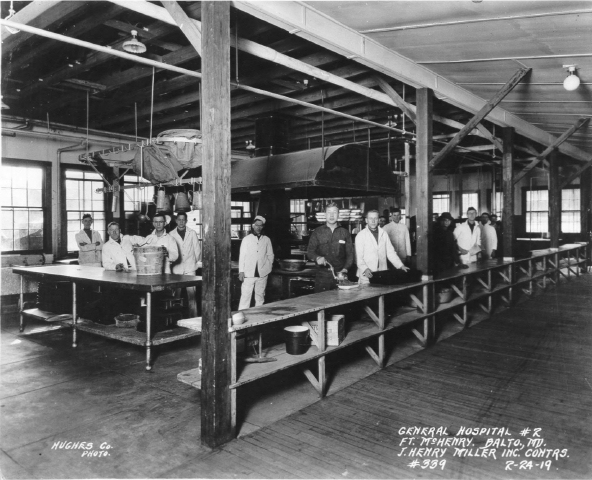
U. S. General Hospital No. 2, Fort McHenry

Founded: Established June 20, 1917, on recommendation of Surgeon General. First soldiers arrived August 22, 1917 to implement opening of hospital. Operating room opened October 29, 1917. Wards completed 1918.
Closed: Hospital buildings demolished in 1922.
Location: Fort McHenry, Baltimore, MD

Images

Chapel. Fort McHenry National Monument and Historic Shrine. Fort McHenry National Monument and Historic Shrine

Chapel. Fort McHenry National Monument and Historic Shrine. Fort McHenry National Monument and Historic Shrine

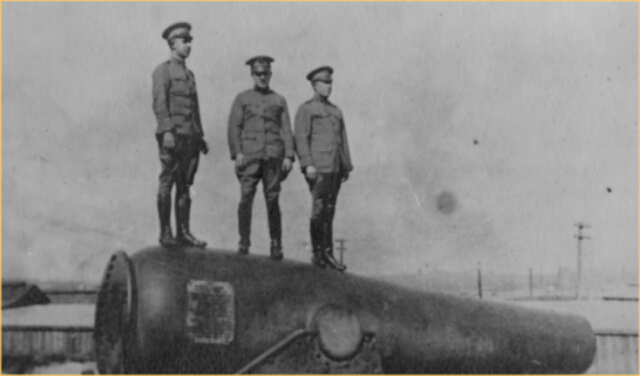
Unidentified Army Medical Officers on Rodman Guns. Fort McHenry National Monument and Historic Shrine. Fort McHenry National Monument and Historic Shrine

Unidentified Army Medical Officers on Rodman Guns. Fort McHenry National Monument and Historic Shrine. Fort McHenry National Monument and Historic Shrine

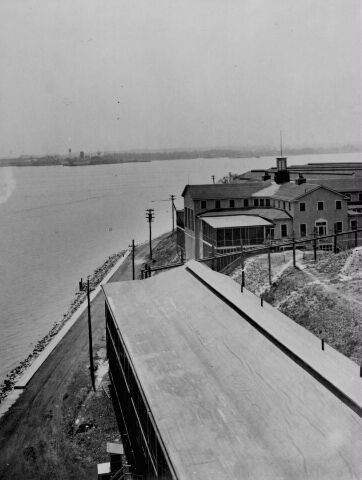
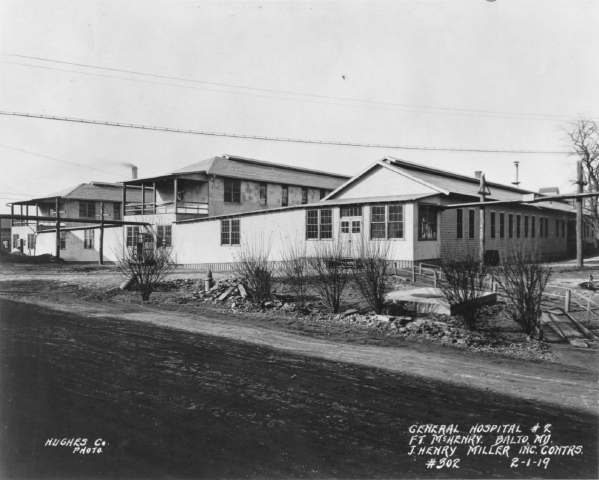
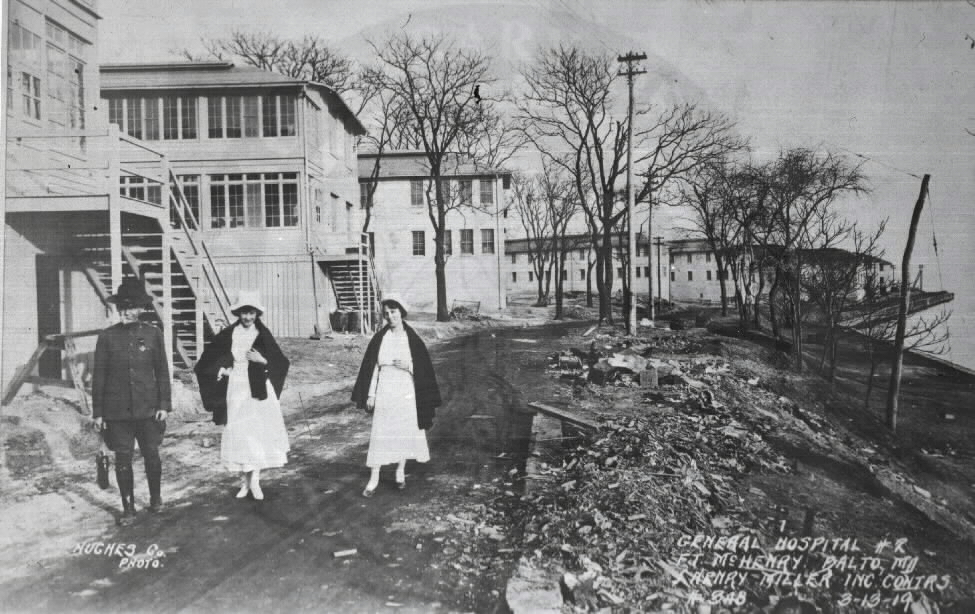
Hospital at Fort McHenry, WWI. Fort McHenry National Monument and Historic Shrine. Fort McHenry National Monument and Historic Shrine

Hospital at Fort McHenry, WWI. Fort McHenry National Monument and Historic Shrine. Fort McHenry National Monument and Historic Shrine

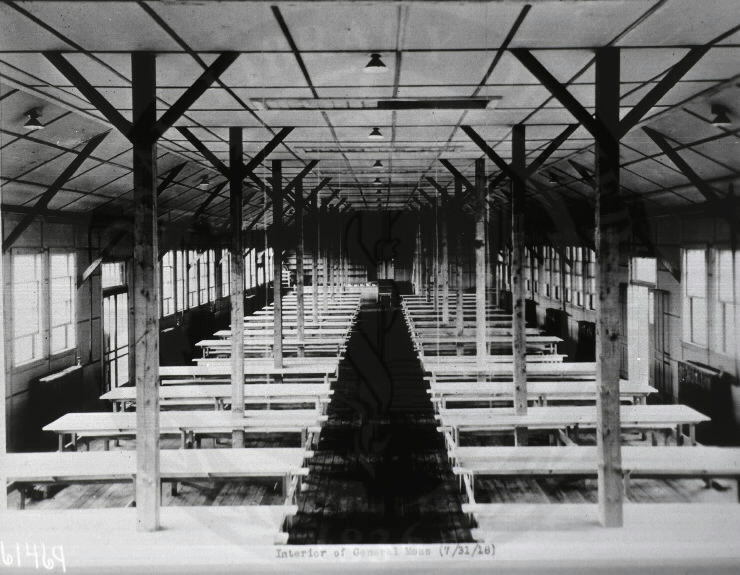
Main Mess Hall. Fort McHenry National Monument and Historic Shrine. Fort McHenry National Monument and Historic Shrine

Main Mess Hall. Fort McHenry National Monument and Historic Shrine. Fort McHenry National Monument and Historic Shrine

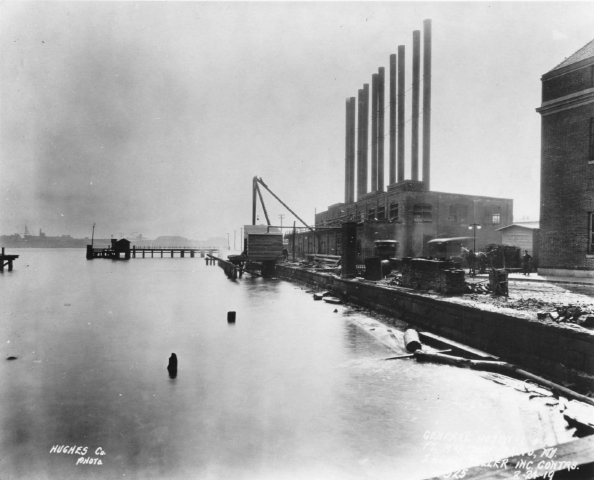
Interior Main Power House. Fort McHenry National Monument and Historic Shrine. Fort McHenry National Monument and Historic Shrine

Interior Main Power House. Fort McHenry National Monument and Historic Shrine. Fort McHenry National Monument and Historic Shrine

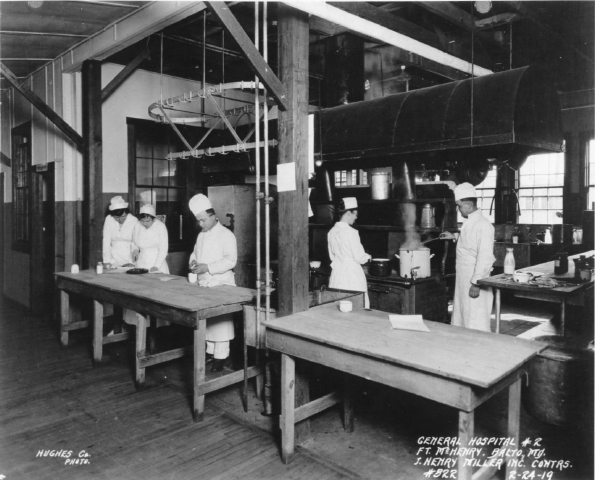
Kitchen - Officer's Mess. Fort McHenry National Monument and Historic Shrine. Fort McHenry National Monument and Historic Shrine

Kitchen – Officer’s Mess. Fort McHenry National Monument and Historic Shrine. Fort McHenry National Monument and Historic Shrine

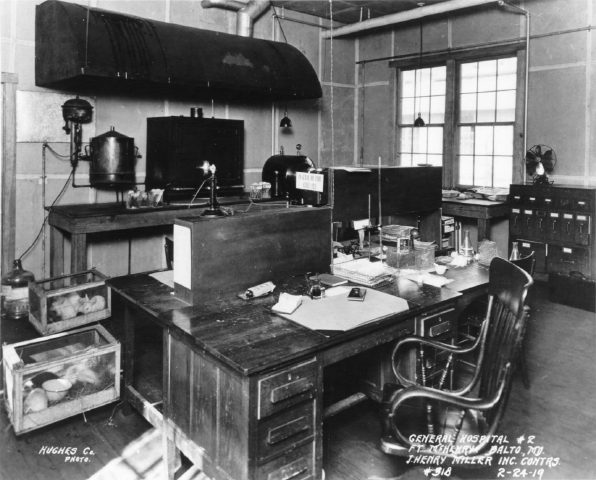
Office in Laboratory. Fort McHenry National Monument and Historic Shrine. Fort McHenry National Monument and Historic Shrine

Office in Laboratory. Fort McHenry National Monument and Historic Shrine. Fort McHenry National Monument and Historic Shrine

Barracks and Wards - Wards 10-17 (wood construction). Fort McHenry National Monument and Historic Shrine. Fort McHenry National Monument and Historic Shrine

Barracks and Wards – Wards 10-17 (wood construction). Fort McHenry National Monument and Historic Shrine. Fort McHenry National Monument and Historic Shrine

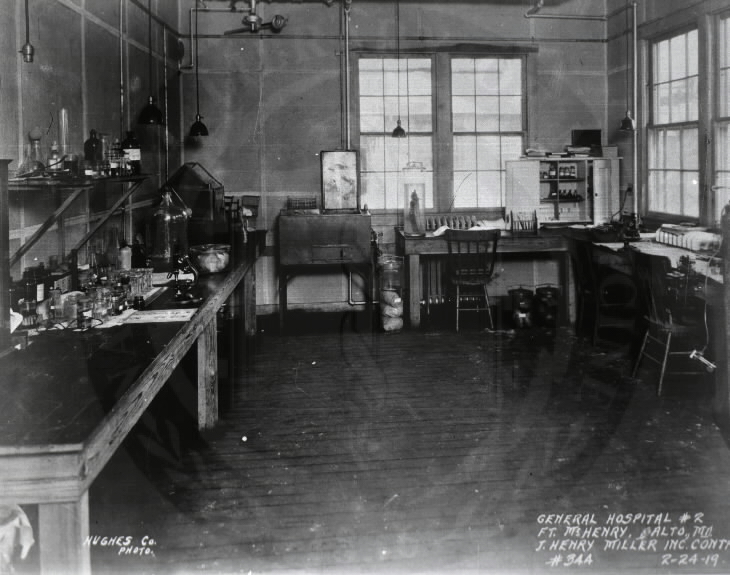
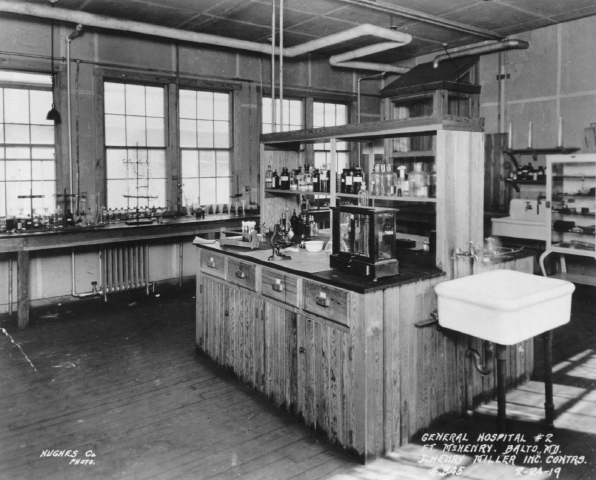
U.S. Army. General Hospital No. 2, Fort McHenry, Baltimore : Laboratory. Images from the History of Medicine Collection. National Library of Medicine, History of Medicine Division

U.S. Army. General Hospital No. 2, Fort McHenry, Baltimore : Laboratory. Images from the History of Medicine Collection. National Library of Medicine, History of Medicine Division

Diet Kitchen Main Mess. Fort McHenry National Monument and Historic Shrine. Fort McHenry National Monument and Historic Shrine

Diet Kitchen Main Mess. Fort McHenry National Monument and Historic Shrine. Fort McHenry National Monument and Historic Shrine

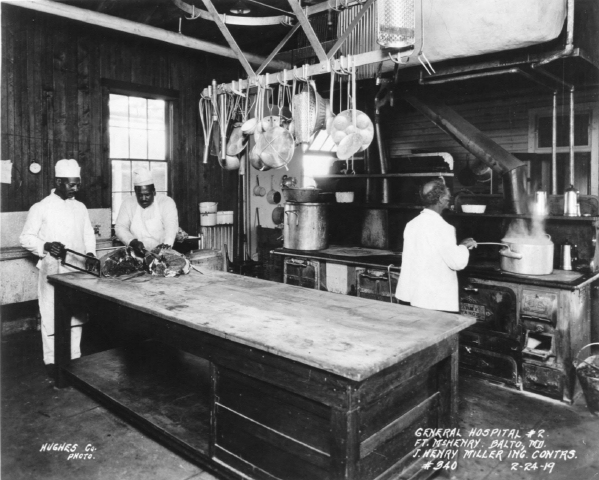
Main Kitchen. Fort McHenry National Monument and Historic Shrine. Fort McHenry National Monument and Historic Shrine

Main Kitchen. Fort McHenry National Monument and Historic Shrine. Fort McHenry National Monument and Historic Shrine

Nurses' Mess and Quarters. Fort McHenry National Monument and Historic Shrine. Fort McHenry National Monument and Historic Shrine

Nurses’ Mess and Quarters. Fort McHenry National Monument and Historic Shrine. Fort McHenry National Monument and Historic Shrine

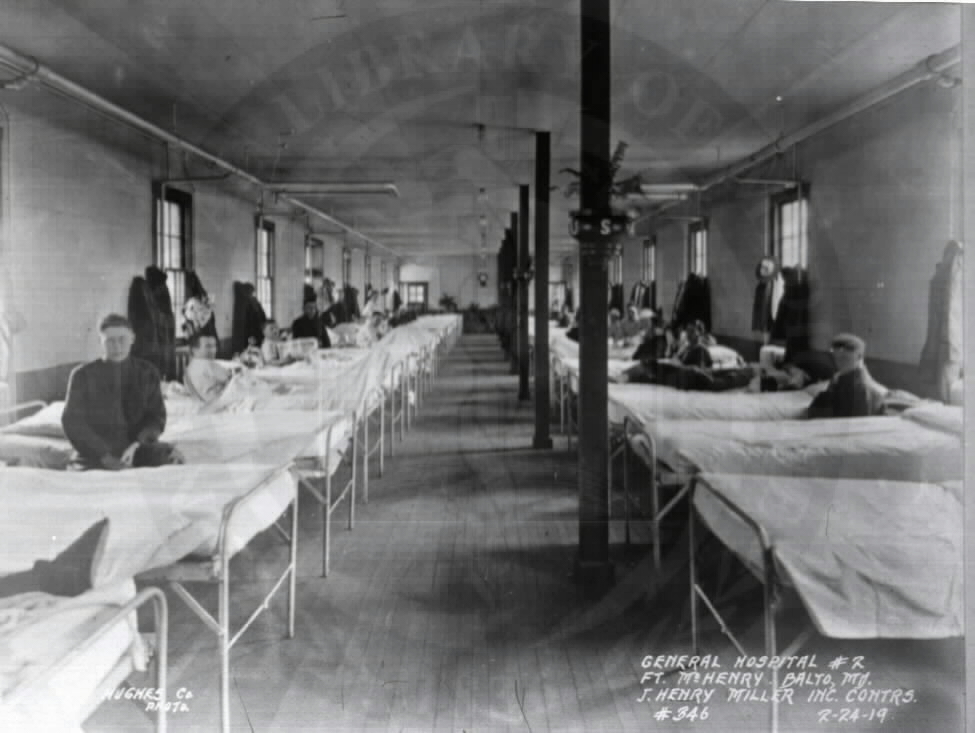
Typical Ward. Fort McHenry National Monument and Historic Shrine. Fort McHenry National Monument and Historic Shrine

Typical Ward. Fort McHenry National Monument and Historic Shrine. Fort McHenry National Monument and Historic Shrine

Ward 30. Fort McHenry National Monument and Historic Shrine. Fort McHenry National Monument and Historic Shrine

Ward 30. Fort McHenry National Monument and Historic Shrine. Fort McHenry National Monument and Historic Shrine

Exterior Main Power House. Fort McHenry National Monument and Historic Shrine. Fort McHenry National Monument and Historic Shrine

Exterior Main Power House. Fort McHenry National Monument and Historic Shrine. Fort McHenry National Monument and Historic Shrine

Back Road before Completion. Fort McHenry National Monument and Historic Shrine. Fort McHenry National Monument and Historic Shrine

Back Road before Completion. Fort McHenry National Monument and Historic Shrine. Fort McHenry National Monument and Historic Shrine

Along Connecting Corridor Two-Story Wards. Fort McHenry National Monument and Historic Shrine. Fort McHenry National Monument and Historic Shrine

Along Connecting Corridor Two-Story Wards. Fort McHenry National Monument and Historic Shrine. Fort McHenry National Monument and Historic Shrine

New Laboratory - Interior. Fort McHenry National Monument and Historic Shrine. Fort McHenry National Monument and Historic Shrine

New Laboratory – Interior. Fort McHenry National Monument and Historic Shrine. Fort McHenry National Monument and Historic Shrine

New Laboratory - Interior. Fort McHenry National Monument and Historic Shrine. Fort McHenry National Monument and Historic Shrine

New Laboratory – Interior. Fort McHenry National Monument and Historic Shrine. Fort McHenry National Monument and Historic Shrine

Demolition. Fort McHenry National Monument and Historic Shrine. Fort McHenry National Monument and Historic Shrine

Demolition. Fort McHenry National Monument and Historic Shrine. Fort McHenry National Monument and Historic Shrine

U.S. General Hospital No. 2, Fort McHenry, View of the Grounds. Images from the History of Medicine Collection. National Library of Medicine, History of Medicine Division

U.S. General Hospital No. 2, Fort McHenry, View of the Grounds. Images from the History of Medicine Collection. National Library of Medicine, History of Medicine Division

U.S. General Hospital No. 2, Fort McHenry. Images from the History of Medicine Collection. National Library of Medicine, History of Medicine Division

U.S. General Hospital No. 2, Fort McHenry. Images from the History of Medicine Collection. National Library of Medicine, History of Medicine Division

U.S. General Hospital No. 2, Fort McHenry - Interior. Images from the History of Medicine Collection. National Library of Medicine, History of Medicine Division

U.S. General Hospital No. 2, Fort McHenry – Interior. Images from the History of Medicine Collection. National Library of Medicine, History of Medicine Division

U.S. General Hospital No. 2, Fort McHenry - Interior. Images from the History of Medicine Collection. National Library of Medicine, History of Medicine Division

U.S. General Hospital No. 2, Fort McHenry – Interior. Images from the History of Medicine Collection. National Library of Medicine, History of Medicine Division

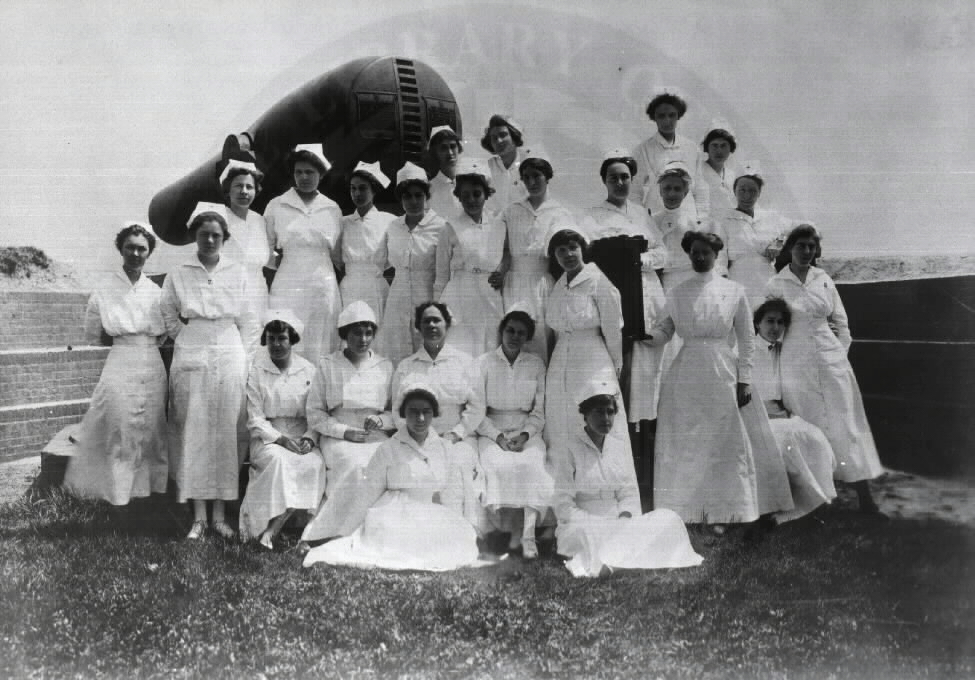
U.S. General Hospital No. 2, Fort McHenry - Group of Nurses. Images from the History of Medicine Collection. National Library of Medicine, History of Medicine Division

U.S. General Hospital No. 2, Fort McHenry – Group of Nurses. Images from the History of Medicine Collection. National Library of Medicine, History of Medicine Division

U.S. General Hospital No. 2, Fort McHenry - General Mess Hall. Images from the History of Medicine Collection. National Library of Medicine, History of Medicine Division

U.S. General Hospital No. 2, Fort McHenry – General Mess Hall. Images from the History of Medicine Collection. National Library of Medicine, History of Medicine Division

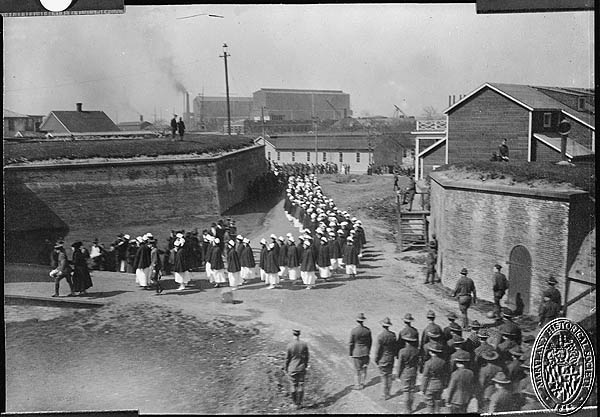
McFee - FOMC – nurses PP32. Maryland Historical Society

McFee – FOMC – nurses PP32. Maryland Historical Society

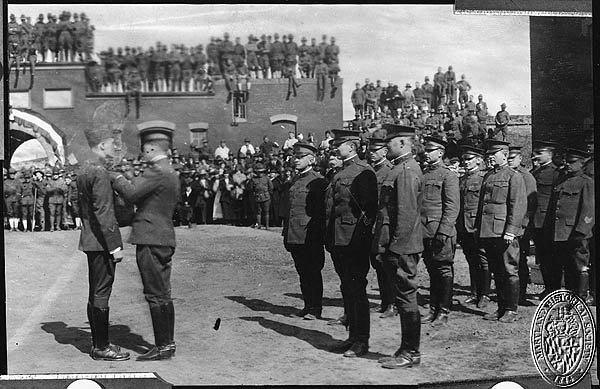
McFee - award of medal PP32 (Z24.603). . Maryland Historical Society

McFee – award of medal PP32 (Z24.603). Maryland Historical Society

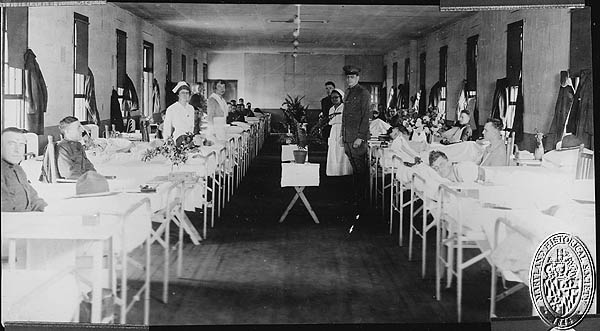
McFee - hospital ward PP32 (Z24.604). Maryland Historical Society

McFee – hospital ward PP32 (Z24.604). Maryland Historical Society

McFee - ward PP32 (Z24.607). Maryland Historical Society

McFee – ward PP32 (Z24.607). Maryland Historical Society

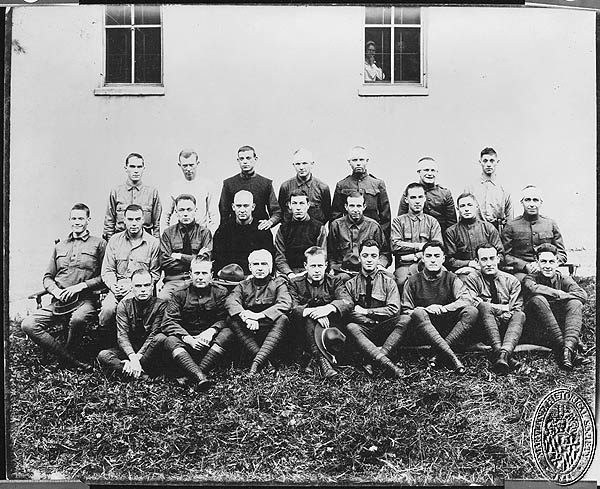
McFee - group of recovering wounded PP32 (Z24.608). Maryland Historical Society

McFee – group of recovering wounded PP32 (Z24.608). Maryland Historical Society

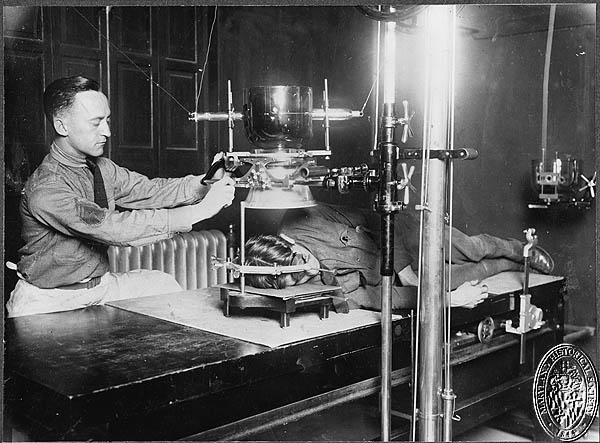
McFee - x-ray of head PP32 (Z24.609). Maryland Historical Society

McFee – x-ray of head PP32 (Z24.609). Maryland Historical Society

Additional Information

  • Dates: 1918/06/01
    Notes: The post barber shop has recently moved into commodious, light and airy quarters on the second floor of the canteen building. It is nicely fitted with three new chairs, two wash bowls and several sporty mirrors. It cost the canteen several hundred dollars to establish the new shop.
    Private Frank Carmean is head barber. He is ably assisted by Joseph Firezzetti and Vito DeLeonardi. Joe Prebezewski presides over the shoe shining department. Call and get acquainted with all of them.
    Source: Troublebuster (Fort McHenry), 1918/06/01, p. 1
  • Dates: 1918/06/01
    Notes: A fine Lippincott sanitary soda fountain is being installed in the canteen for the purpose of helping the wealthy private get rid of his surplus cash. It is equipped with porcelain pumps and tanks and has a continuous electric carbonator.
    Source: Troublebuster (Fort McHenry), 1918/06/01, p. 1
  • Dates: 1918/06/01
    Notes: Our telegraph office is now in operation at the headquarters of the Officer of the Day. It is in charge of Pvt. E.M. Clark, graduate of the Fort McHenry School of Telegraphy. Hours are from 8 a.m. to 9 p.m.
    Source: Troublebuster (Fort McHenry), 1918/06/01, p. 1
  • Dates: 1918/06/01
    Notes: General Hospital No. 2 trimmed General Hospital No. 7 at baseball last Saturday to the tune of 4 to 1. The game took place on the Charles St. Ave. grounds.
    Benda, the Fort McHenry twirler, won his own game in the sixth with a long wallop to the left garden, scoring two runs. He was injured in the sixth and was relieved by Johnsonbaugh, who pitched steadily and held the boys of No. 7 without a schore for the rest of the game.
    Source: Troublebuster (Fort McHenry), 1918/06/01, p. 1
  • Dates: 1918/06/01
    Notes: The shoe shop is now prepared to do work for officers, nurses and enlisted men. Its servies are furnished free to enlisted men and patients thru the Q.M., who will give a repair order to men who are on their uppers. Other customers of the shop are served at the following prices.

    Half soles, sewed 75
    Half soles, nailed 60
    Full soles, sewed 1.00
    Rubber heels 35
    Leather heels 20
    Patches

    Source: Troublebuster (Fort McHenry), 1918/06/01, p. 1

  • Dates: 1918/06/01
    Notes: Major Herring has now moved with his patients to the new psychiatric building which is fully equipped with all the appliances which are of use in treating mental cases.
    Source: Troublebuster (Fort McHenry), 1918/06/01, p. 1
  • Dates: 1918/06/01
    Notes: Three new cannon have been mounted near the Administration Building on neat concrete pedestals. Between them on the lawn appear the words U.S.A. General Hospital No. 2, in raised concrete letters. The effect of the whole is very pleasing.
    Source: Troublebuster (Fort McHenry), 1918/06/01, p. 1
  • Dates: 1918/06/01
    Notes: Description of hospital Educational Office.
    Source: Troublebuster (Fort McHenry), 1918/06/01, p. 2
  • Dates: 1918/06/01
    Notes: A splending concert was given the post last Sunday afternoon by the band of the Baltimore Dry Dock Shipbuilding Co. It is to be hoped that these concerts will be frequently repeated thruout the summer.
    Source: Troublebuster (Fort McHenry), 1918/06/01, p. 1
  • Dates: 1918/06/01
    NotesA TALE OF TWO GIFTS
    Some days ago Mrs. J.F. Sipple, Regent of the Baltimore Chapter of the D.A.R. asked Colonel Purnell what the chapter could do the serve the post. “Get us a pool table,” was the reply.Mrs. Sipple immediately inserted an advertisement in a newspaper, stating that the D.A.R. would be glad to receive a table for the boys at Fort McHenry. The paper had not been off the press many hours when Mr. Louis Solomon telephoned her that he would be glad to furnish the desired table. It was brought to the fort the next day.Hardly had it been installed when Mr. S.J. Morton sent word thru Mrs. W.F. Rogers that he had a table for the post. Mrs. Rogers interviewed Col. Purnell to find out if he would accept a second table. “I’ll take a dozen if you can get them,” he answered.The second table is now in the recreation room and the D.A.R. is hunting for the other ten.Our thanks are due to Mrs. Sipple and Mrs. Rogers, to the D.A.R., and especially to Mr. Solomon and Mr. Morton for their interest in Fort McHenry.Source: Troublebuster (Fort McHenry), 1918/06/01, p. 4
  • Dates: 1918/06/01
    Notes: A new Hamilton piano has just been received by the Y.M.C.A. and will be installed in the recreation room in the canteen building.
    Source: Troublebuster (Fort McHenry), 1918/06/01, p. 4
  • Dates: 1918/06/01
    Notes: Description of new lunch room at the fort.
    Source: Troublebuster (Fort McHenry), 1918/06/01, p. 4
  • Dates: 1918/06/29
    Notes: A somewhat new feature of the entertainment so generously provided by the citizens of Baltimore for our boys is the motor boat service made possible by the Motor Launch Club of Maryland, largely through the efforts of Mr. Myer Rosenbush. The boats are sent to our pier five evenings a week and take parties of convalescent men on trips down the bay and to points of interest. Refreshments and feminine companionship are usually provided and the trip is made a real treat in every sense of the word. What would life be without such friends as these.
    Source: Troublebuster (Fort McHenry), 1918/06/29, p. 1
  • Dates: 1918/06/29
    Notes: Our shoe shop received it new machinery this week and is now completely equipped not only to repair old shoes, but even to make if necessary, new ones. A force of eight men are now employed in this always busy and cheerful school shop.
    Source: Troublebuster (Fort McHenry), 1918/06/29, p. 1
  • Dates: 1918/06/29
    Notes: U.S.A. General Hospital No. 2 is soon to be the recepient of a gift of $834.00, the proceeds of a Minstrel Show given in Highlandtown last January. The entertainment, which was participated in by prominent business and professional men of the city, was given for the benefit of the soldiers, and the committee in charge has decided that by giving the money to the Fort McHenry hospital it will accomplish the greatest good in relieving the suffering of boys who have been wounded or gassed and sent back to this country. Another instance of the loyalty and devotion of our friends, the citizens of Maryland!
    Source: Troublebuster (Fort McHenry), 1918/06/29, p. 1
  • Dates: 1918/06/29
    Notes: Captain William H. Mearns is now attached to the Educational Office as Reconstruction Psychologist.
    Source: Troublebuster (Fort McHenry), 1918/06/29, p. 1
  • Dates: 1918/06/29
    Notes: On Saturday Fort McHenry plays Camp Holabird; the return game, on the following Saturday, will be played at Latrobe Park.
    Source: Troublebuster (Fort McHenry), 1918/06/29, p. 1
  • Dates: 1918/06/29
    Notes: A new regular feature of the entertainments provided by the Y.M.C.A. for the soldiers at Fort McHenry will be moving pictures every Saturday and Monday night. Only the highest class films will be provided, those showing Douglas Fairbanks, Mary Pickford, and the like. The schedule of the films will be printed weekly in the TROUBLEBUSTER.
    This Saturday night the picture will be “The Spirit of 17,” featuring Jack Pickford, an interesting and inspiring picture showing what our soldiers are doing.
    Source: Troublebuster (Fort McHenry), 1918/06/29, p. 1
  • Dates: 1918/06/29
    Notes: A $625 pool table has just been donated to the Y.M.C.A. and placed in No. 1 Recreation Hall.
    Source: Troublebuster (Fort McHenry), 1918/06/29, p. 1
  • Dates: 1918/06/29
    Notes: We are glad to observe the gangs of men again at work upon our hospital buildings. Ground is being broken for the new wards and one or two of the smaller new buildings are nearing completion.
    Source: Troublebuster (Fort McHenry), 1918/06/29, p. 1
  • Dates: 1918/06/29
    NotesOUR PSYCHIATRIC PATIENTS
    There are a number of patients in this hospital whose sickness is mental rather than physical. Their brain or their nervous system is afflicted but they seem normal because the rest of tehir bodies is normal. When, therefore, these patients do strange things it is the easy thing for the bystander to laugh and make fun of them. The heedless man does not realize the harm he may be doing in this way. To joke or make fun of a broken leg does no harm. You are attacking him at the seat of his disease. You would not kick a man with a broken leg. Why strike with harmful impressions the sick brain of a mentally diseased patient?The mental patients should be treated with kind sympathy and consideration. Never make fun of them, even if they make fun of their own condition. Do not encourage them in it. So far as possible they should be prevented from thinking of their abnormal state.How would you treat your brother if he were in such a condition? Probably you would not refer to him as a nut, even if he applied that term to himself.Help these fellows all you can. Treat their affliction as the serious thing it is. Above all things else, do not think of them simply as fit butts for your jokes. Do not make it more difficult for them to help themselves.Source: Troublebuster (Fort McHenry), 1918/06/29, p. 2
  • Dates: 1918/06/29
    Notes: Description of the School of Telegraphy
    Source: Troublebuster (Fort McHenry), 1918/06/29, p. 2
  • Dates: 1918/06/29
    Notes: Description of new Convalescent Camp
    Source: Troublebuster (Fort McHenry), 1918/06/29, p. 3
  • Dates: 1918/06/29
    Notes: The TROUBLE BUSTER is glad to observe that the war-gardens in the angles of the old Star Fort are coming on finely. The lettuce and lima beans are doing their bit, and the prospects for a large tomato crop are particularly good. We are especially happy over this fact, for no one knows how fond we are of tomatoes.
    Source: Troublebuster (Fort McHenry), 1918/06/29, p. 3
  • Dates: 1918/06/29
    Notes: Our fatigue squads have shown a veritable passion for planting hedges and flower beds this spring, and thanks to their efforts our post is rapidly becoming transformed from a jumble of ugly buildings to an orderly and beautiful park. The TROUBLE BUSTER sees great possiblities for formal gardening in the space between the wings of the Physical Therapy building, one of which is rapidly becomikng hallowed by the weekly dances of the officers. Perhaps our versatile cement workers intend to contribute some of the ornamental pieces for its decoration. There is a noticeable absence of shrubs all about our grounds, but perhaps like whiskers they are not considered sanitary. We wonder.
    Source: Troublebuster (Fort McHenry), 1918/06/29, p. 3
  • Dates: 1918/06/29
    Notes: The hospital has received a beautiful knitted blanket, composed of squares of many colors. The blanket is the work of boys of the William Fell School, No. 6, at Ann and Fleet Sts. Last Monday eight of the boys visited the post with two of their teachers to present the blanket and get a glimpse of some of the returned soldiers. We appreciate your kindness and your efforts, boys. It wouldn’t take long to win the war if every American had your spirit.
    Source: Troublebuster (Fort McHenry), 1918/06/29, p. 3
  • Dates: 1918/06/29
    Notes: The swimming pier which has recently been projected for a hundred feet into the Patapsco is now one of the most popular places on the post late on hot afternoons. Come on in! The water’s fine.
    Source: Troublebuster (Fort McHenry), 1918/06/29, p. 3
  • Dates: 1918/06/29
    Notes: Description of new Cafeteria
    Source: Troublebuster (Fort McHenry), 1918/06/29, p. 4
  • Dates: 1918/07/06
    Notes: Forty patients from Fort McHenry were entertained on the Fourth with automobile trips. One party of 25 were taken out by the Red Cross under the direction of Mrs. J. Henry Stromeier. They took part in the Red Cross parade in Baltimore, and were entertained at supper, with dancing afterwards. Many of the men had never been out of the post before. A glorious good time was reported by every one of the lucky 40.
    Source: Troublebuster (Fort McHenry), 1918/07/06, p. 1
  • Dates: 1918/07/06
    Notes: Description of Commercial Cources offered at post hospital.
    Source: Troublebuster (Fort McHenry), 1918/07/06, p. 2
  • Dates: 1918/07/06
    Notes: Description of Fort McHenry Press.
    Source: Troublebuster (Fort McHenry), 1918/07/06, p. 3
  • Dates: 1918/07/06
    Notes: In the future all ambulances and automobiles on the post are to be repaired in the Educational Departments shops.
    Source: Troublebuster (Fort McHenry), 1918/07/06, p. 3
  • Dates: 1918/07/06
    NotesSOLDIER DROWNED
    An unfortunate accident marred the Fourth of July celebration when Alfred J. Airey of Medical Detachment No. 2, was drowned while swimming off the pier on the north side of the Fort. Private Airey had been diving with a companion and failed to come to the surface. The alarm was given, and divers were sent down, but it was not until the police boat Lannan arrived that the body was recovered.In the hope of finding a spark of life in the body, Major Chatard and Lieut. Johnson worked with the pulmotor for nearly an hour, but without success.Private Airey was 22 years old and lived at 1131 Light Street. He had been in the service less than a week, having joined only last Friday. He is survived by his mother, a brother and sister.Source: Troublebuster (Fort McHenry), 1918/07/06, p. 4
  • Dates: 1918/09/21
    Notes: Description of Post Band.
    Source: Troublebuster (Fort McHenry), 1918/09/21, p. 4
  • Dates: 1918/09/21
    Notes: Description of new hospital buildings.
    Source: Troublebuster (Fort McHenry), 1918/09/28, p. 1
  • Dates: 1918/09/21
    Notes: The much-talked about Spanish Influenza arrived last week at the Fort…. [Article lists names of deaths which occurred as a result of the epidemic.]
    Source: Troublebuster (Fort McHenry), 1918/09/28, p. 4
  • Dates: 1918/10/16
    Notes: Description of rush to complete new recreation and general purpose building.
    Source: Troublebuster (Fort McHenry), 1918/10/16, p. 1
  • Dates: 1918/10/16
    Notes: Description of role of army nurses in military hospitals.
    Source: Troublebuster (Fort McHenry), 1918/10/16, p. 3
  • Dates: 1920
    Notes: Listing of staff, inmates, etc. at US General Hospital No. 2. In (1920 U.S. Census) MARYLAND, BALTIMORE, 24-WD BALTIMORE, FORT MCHENRY Series: T625 Roll: 668 Page: 22


Kennard Hospital

Location: 704-706 Ensor Street, Baltimore, MD

Additional Information

  • Dates: n. d.
    Notes: Founded by Prof. G. W. Kennard
    Source: Seventh Edition, 1919-1920 The First Colored Professional, Clerical, Skilled and Business Directory of Baltimore City with Washington, D.C. and Annapolis Annex. Baltimore, MD: Robert W. Coleman, Publishing Co. Baltimore: Robert W. Coleman, Publishing Co.: 109


U. S. General Hospital McKim’s Mansion

Founded: ca. May 10, 1862
Closed: August 24, 1865. Patients transferred to Hick’s General Hospital. Empty from December 1863 to March 1864.
Location: McKim’s Mansion on Gallows Hills on Greenmount Avenue near Greenmount Cemetery and the Bolton Depot of the North Central Railroad, Baltimore, MD

Images

McKims Mansion. Medical and Surgical History of the Civil War, Vol. VI [Formerly entitled The Medical and Surgical History of the War of the Rebellion (1861-1865)] Wilmington: Broadfoot Publishing Co.: 911.

McKims Mansion. Medical and Surgical History of the Civil War, Vol. VI [Formerly entitled The Medical and Surgical History of the War of the Rebellion (1861-1865)] Wilmington: Broadfoot Publishing Co.: 911.

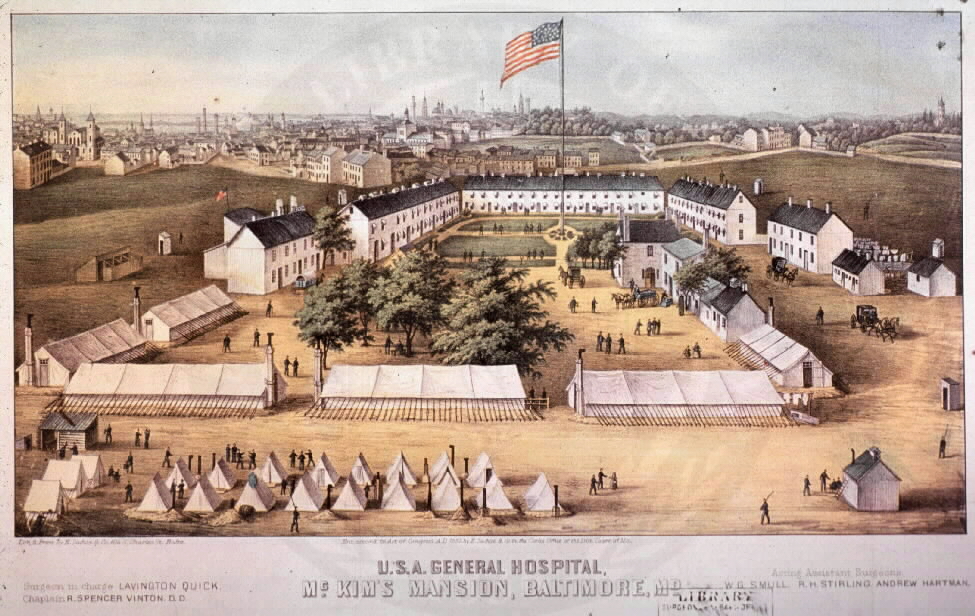
U.S.A. General Hospital, McKim's Mansion, Baltimore, MD / Lith & Print by E. Sachse & Co.. Images from the History of Medicine Collection, Order No. A024087. National Library of Medicine, History of Medicine Division

U.S.A. General Hospital, McKim’s Mansion, Baltimore, MD / Lith & Print by E. Sachse & Co.. Images from the History of Medicine Collection, Order No. A024087. National Library of Medicine, History of Medicine Division

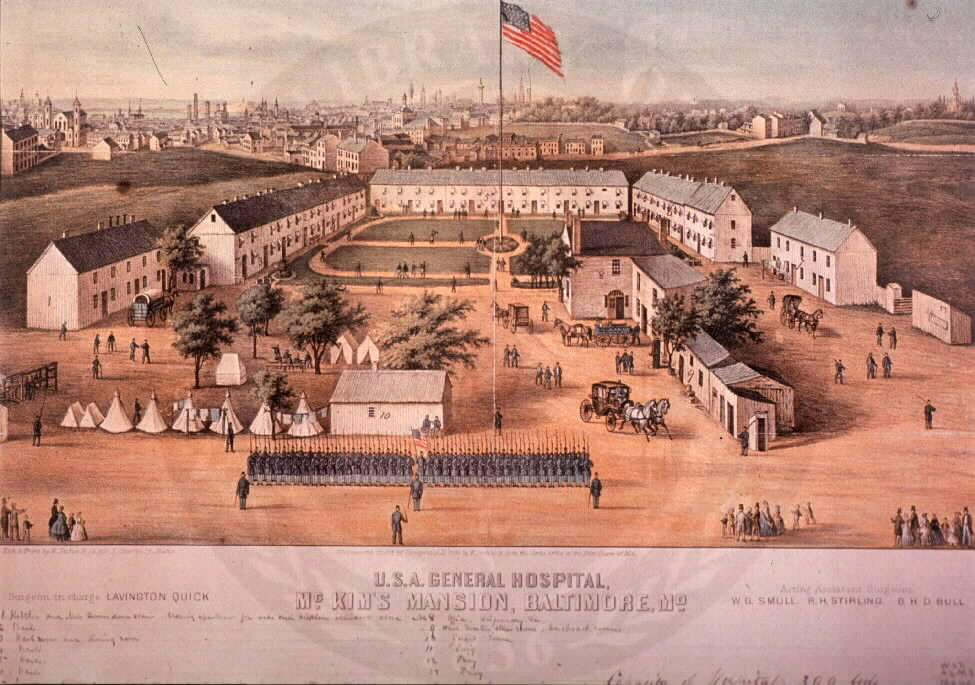
U.S.A. General Hospital, McKim's Mansion, Baltimore, MD / Lith & Print by E. Sachse & Co.. Images from the History of Medicine Collection, Order No. A024088. National Library of Medicine, History of Medicine Division

U.S.A. General Hospital, McKim’s Mansion, Baltimore, MD / Lith & Print by E. Sachse & Co.. Images from the History of Medicine Collection, Order No. A024088. National Library of Medicine, History of Medicine Division

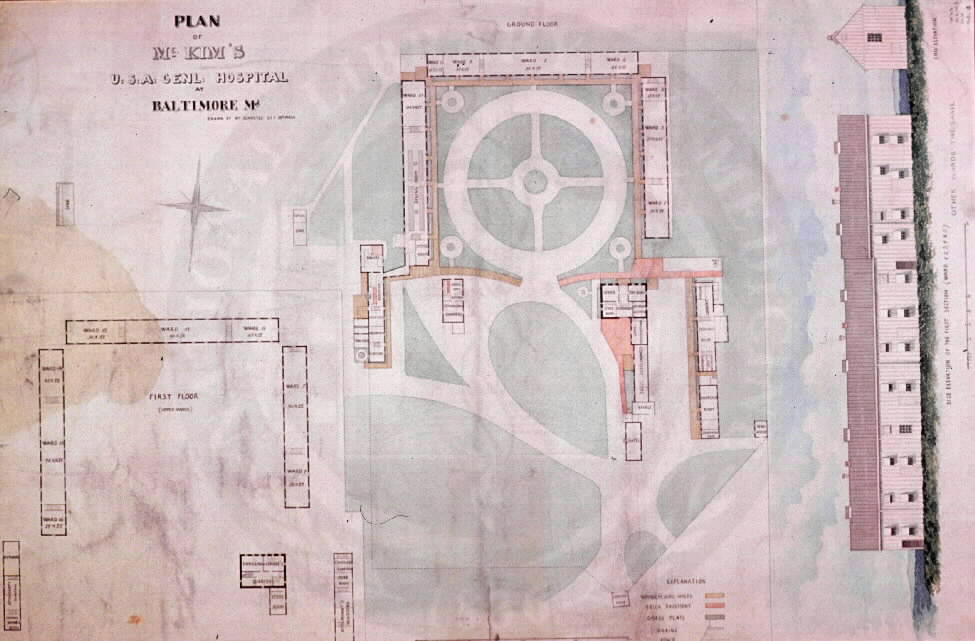
Plan of McKim's U.S.A. General Hospital at Baltimore. Images from the History of Medicine Collection, Order No. A027660. National Library of Medicine, History of Medicine Division

Plan of McKim’s U.S.A. General Hospital at Baltimore. Images from the History of Medicine Collection, Order No. A027660. National Library of Medicine, History of Medicine Division

Additional Information

  • Dates: 1862-1865
    Notes: Hospital records available at the National Archives, Washington, DC. See RG94 Entry 553 for listing of available hospital registers.
  • Dates: 1863-1864
    Notes: Served as a Colored Troops Hospital, March to June 1864; white and black thereafter. Empty December 1863 to March 1864.
    Source: Indexes to Field Records of Hospitals, 1821-1912. Maryland. National Archives, Washington, DC. RG94 E544
  • Dates: n. d.
    Notes: McKIM’S MANSION, BALTIMORE, MD. — The barracks at this mansion, in the northern suburbs of the city, were originally intended as temporary shelter for troops. They consisted of three long two-story buildings of rough boards, with no interior finish. One was 150 feet long, another 175 feet and the third 200 feet. All were 22 feet wide, with a height of 7 feet 10 inches in the first-floor rooms and of 7 feet to the plate and 17 feet to the ridge in those of the second floor. They were built close to the ground, the latter in some parts having been dug out to remove irregularities. The floors were coarsely joined, leaving interstices that permitted small fragments of refuse matter to drop from the upper to the lower wards or from the latter to the unventilated soil beneath. Louvered turrets were provided for the ventilation of the upper rooms. Small wooden flues, 8 to 12 inches square, passing from the first-floor rooms to the ridge, failed to induce the intended air-movement. These buildings formed three sides of a parallelogram, the remaining side of which was filled in with tent-wards. Stoves were used to warm the wards. Water was derived from the city supply, but it was so scanty that only two bath-tubs were in use and no water-closets.
    Source: Medical and Surgical History of the Civil War, Vol. VI [Formerly entitled The Medical and Surgical History of the War of the Rebellion (1861-1865)] Wilmington: Broadfoot Publishing Co.: 910-911
  • Dates: n. d.
    NotesFemale nurses were borne on the rolls of many of the hospitals. At one time, in the WEST’S BUILDINGS, Baltimore, Md., 20 of 70 nurses were women; at STEWART’S MANSION 15 of 70, at and BEDLOE’S ISLAND, N.Y. Harbor, 10 of 70. These were frequently Sisters of Charity — 40 served at SATTERLEE, 16 and POINT LOOKOUT and 15 at CLIFFBURNE. According to the testimony of all the medical officers who have referred to this point their best service was rendered in connection with extra diets, the linen-room and laundry. Male help was preferred in the wards, save in special cases of prostration and suffering where particular care was needful in theadministration of dietetic or remedial agents. Sometimes where no female aid was employed, female aid societies volunteered their services in superintending the extra diets and taking charge of the contribution room.
    Source: Medical and Surgical History of the Civil War, Vol. VI [Formerly entitled The Medical and Surgical History of the War of the Rebellion (1861-1865)] Wilmington: Broadfoot Publishing Co.: 958


U. S. General Hospital Camden Station

Founded: ca. September 1, 1861
Closed: June 1, 1865. Patients transferred to Jarvis General Hospital
Location: National Hotel and Camden Hall on Camden Street opposite the Camden Street Depot of the B&O Railroad with two buildings opposite, one a piano factory, Baltimore, MD

Additional Information

  • Dates: 1861-1865
    Notes: Hospital records available at the National Archives, Washington, DC. See RG94 Entry 553 for listing of available hospital registers.
  • Dates: 1862/02/11
    NotesNotice, Baltimore Daily Gazette, February 11, 1862 relating to admissions to the National Hotel hopital and Adams Hospital.
  • Dates: n. d.
    Notes: THE NATIONAL HOSPITAL, BALTIMORE, MD. — Extracted from a report of ROBERTS BARTHOLOW, Ass’t Surgeon, U.S. Army. — Notwithstanding the dissimilarity in uses, there is much similarity in the needs of a large hospital and a hotel. In both the business of cooking, eating, sleeping are important concerns, and the manner of doing these with the greatest regard to the personal well-being of the inmates involves all the manifold relations of sanitary science. The National Hotel was organized for hospital purposes by Ass’t Surgeon W.A. HAMMOND, U.S.A., in September , 1861. The prominent reason probably for the selection of this building was the convenience of the situation, being in the immediate vicinity of the Baltimore and Ohio Railroad depot and within six hundred yards of the harbor. The relation of the city to the great lines of communication with our armies in the field then and subsequently vindicates the wisdom of the selection. Some sanitarians have objected to this locality on account of its lowness and vicinity to tide-water. A hospital for the reception of sick and wounded patients obviously should be as near rail and water transportation as possible; and such objections should be held secondary to this necessity. Besides the hotel a large piano factory and eleven dwelling-houses, situated on both sides of Camden street, have been hired for hospital purposes. The National contains the appointments usual in a modern hotel. It is five stories high and contains fifteen wards, various offices, kitchens, store-rooms, laundry and bake-house, as follows: A large hall on the first floor communicates with the office, dispensary, water-closets, lavatory and dining-room; a broad circular stairway passes from this hall through the centre to the top of the house, and has opening into it the corridors between the wards. The wards open from opposite sides into the corridors and consist chiefly of suites of rooms. The front or rear of these rooms have large windows opening externally above the elevation of surrounding houses. The basement contains liquor and commissary store-rooms, coal-cellars, furnace, bake-house and pastry-room. In this part of the hotel building the defects of the situation appear. From the lowness of the ground and defective drainage or original imperfections in the water-pipes permitting leakage, water constantly rises in this basement and a deep well and pump have been always necessary to prevent overflow. The expensive attempts to remedy this evil have had but partial success, and the flow of water requires the more or less frequent use of the pump. The dwelling-houses are all on the same general plan, having hall, parlor, dining-room and kitchen upon the first floor, and rooms of various sizes in the upper stories. The piano factory is five stories in height and has a large and small ward on each floor. The large wards contain twenty beds each and the small ones eight, allowing to each patient 800 cubic feet of air. For convenience of administration the houses on the north side of Camden street are connected with the hotel and on the south side with the piano factory. All the buildings are of brick and, excepting five wards of the factory, have plastered ceilings. Many of the wards in the dwelling-houses have papered walls, but the principal wards in the hotel are hard-finished.Natural currents of air have been wholly relied upon to ventilate the hospital. All the wards in the hotel having ample window-space, and nearly all open grates, there is nothing to be desired as to artificial arrangements. Moreover, the passages between the wards being connected with the central hall and stairway, and having windows at on extremity and transom-windows over the doors of the suites of rooms, an upward current of air from without inward is constantly passing to the ventilator in the roof in addition to the local currents in each room. To prevent interference with this system of currents a block of wood large enough to secure an inch of space is attached to the top of each window and the transoms are removed from the doors. Soldiers are not regardful of the necessity for fresh air and sunshine, and the opportunity of shutting out both must be denied them. A large furnace in the cellar suffices to heat the entrance-hall, dispensary, dining-room and stairway; but as the air supplying the pipes is obtained from the cellar, the furnace is not a desirable addition to the means of ventilation. The wards of the piano factory have large windows at either extremity, and hence are abundantly supplied with air and sunshine. The dwelling-houses were not built with reference to these points. To produce as favorable a sanitary condition as possible the windows of the houses are kept open by blocks of wood, as in the hotel, and wood fires maintained in the open fireplaces. The elevation of the hotel and piano factory being considerably greater than the surrounding houses, the supply of air and sunshine is not hindered from any quarter.

    Water is obtained from the street mains and is distributed in lead pipes. In the hotel there are four bath-rooms supplied with hot and cold water, a bath-room and lavatory in each of the dwelling-houses and a bath-room and lavatory connected with each of the large wards in the piano factory. On the first floor of the hotel, adjoining the main hall, there is a lavatory containing six porcelain bowls, each supplied with hot and cold water, a urinal having an uninterrupted water-supply, and in the same apartment six water-closets either self-acting or operating by a knob, containing porcelain bowls and traps. On each floor above there is a single water-closet similarly arranged and supplied. The discharges from these water-closets are conveyed through iron pipes to the main sink in the rear of the hospital, where the solid portions are deposited, the fluids passing through on earthen pipes from the sink into a street-sewer. The water-closets in the piano factory have cast-iron bowls, and the water is let on the will of the operator — both objectionable arrangements. The water-closets in the principal dwelling houses are attached to the bath-rooms and are in all respects like those in the hotel; but in several the latrines are primitive in style, consisting of wooden seats and a receiving barrel sunk in the ground. Gas-pipes extend throughout the hospital.

    In the hotel there are two kitchens, a small one for the lady superintendent of the female nurses, where the delicacies for the sick are cooked, and the principal kitchen. The former is furnished with an ordinary cooking-stove and the latter with a range having sufficient capacity to cook for three hundred men; the piano factory kitchen has a range of the same capacity, and each dwelling-house has either a range or a cooking stove. All of these kitchens contain the necessary appliances, hot and cold water, wash-rooms, closets and cooking utensils.

    The laundry has twelve fixed tubs with hot and cold water laid on, a large copper boiler for boiling clothes, and washing-machines. The ironing-room is in the basement next to the bake-house; the range for heating the irons contains the water-back for the laundry.

    The bake-house has an excellent oven for baking 200 one-pound loaves, and is supplied with the necessary mixing-boxes, trays, malt-tubs, baking-pans, baker’s scales, bread-tables and shelves.

    There are store-rooms for subsistence supplies, liquors, medical stores, unissued clothes, soiled clothes, knapsacks, unclaimed arms and accoutrements and the effects of deceased soldiers.

    Compared with the limited ward-space, the complexity of the hospital arrangements in very great and the administration of the hospital proportionally difficult. Allowing to each patient 800 cubic feet of space, the whole number of beds is 700. The average daily number of patients is not probably more than 450, consequently the allowance of atmosphere is ordinarily much greater than that indicated above. Assuming 1,200 as the minimum and 1,800 as the maximum allowance of cubic feet of atmosphere to be given each patient in permanent hospitals, the Camden street hospital, if full, would be too much crowded. Medical Inspector PERLEY, U.S. Army, has mentioned a deficiency of air-space as one of the objectionable features of this hospital.

    The sudden importance given to sanitary science in its application to the construction and arrangement of our military hospitals has had the effect of developing various crude, undigested and indigestible options. The maximum allowance of air-space may not prevent the occurrence of hospital gangrene, pyaemia and erysipelas, as the history of some of the new civil hospitals in Europe, built with especial regard to hygienic rules, will show. The 1,800 cubic feet of air allowed a patient may be foul air, and hurtful simply because stagnant. Sufficient space between the beds and a constant renewal of air are more important elements than the number of cubic feet per bed. With respect to these two elements this establishment is not greatly deficient.

    The patients in this hospital being distributed in small wards over a great extent of buildings, the medical and administrative service requires a force of physicians, wardmasters and attendants greater than a pavilion hospital of the same capacity. * * * It is not easy to transport a patient, ill or badly wounded, up five stories of stairway. It was therefore one of the earliest cares of Dr. HAMMOND to have constructed an admirable arrangement for elevating patients — a large dumb waiter. When the piano factory was converted into a hospital the same mechanical contrivance was adopted. Not only are these elevators useful in transferring patients, but they are constantly employed for manifold purposes in the daily economy of the hospital services, for carrying up food and clothing and for sending down the dead, soiled clothes, utensils, etc.

    Source: Medical and Surgical History of the Civil War, Vol. VI [Formerly entitled The Medical and Surgical History of the War of the Rebellion (1861-1865)] Wilmington: Broadfoot Publishing Co.: 899-901

  • Dates: n. d.
    Notes: The next seven cases are from the NATIONAL HOSPITAL, Baltimore, Maryland, Assistant Surgeon George M. McGill, U.S.A., surgeon in charge. The notes of sixty-one post mortem examinations, made by Dr. McGill while in charge of this hospital, were printed by him on a hand-press in the hospital, and forwarded to the Surgeon General’s Office.* From these notes the following abstracts have been made, which include all the autopsies reported by Dr. McGill from the National Hospital on cases of diarrhoea or dysentery:Case 193.– Private C.B. Kittle, 10th Wisconsin battery; age 32; admitted from the medical director’s office January 10, 1865. Diarrhoea, with extremely irritable stomach and pain in the right iliac fossa. About the third day after admission low fever set in, with muttering delirium at night, and slight cough. Some fine crepitation was heard over the lower portion of the right lung. Died, Janury 16th.–Acting Assistant Surgeon J.G. Keller. Autopsy: Body emaciated; right side of chest, anteriorly, larger than the left. The brain was normal. There was red hepatization of the posterior third of the upper lobe of the right lung, the whole of its lower lobe, and the central portion of the lower lobe of the left lung; on pressure, the hepatized portions yielded an abundance of grayish puruloid fluid. Inflammatory spots and ulcers were observed in the lower portion of the ileum, and in the large intestine. One of the ulcers in the caecum had perforated, and communicated with a small abscess containing about two ounces of dark-colored, offensive, caseous, puruloid matter, which burrowed between the illiacus internus and psoas magnus muscles; extravasation into the abdominal cavity had been prevented by adhesion of the caecum and ascending colon to the abdominal parietes. The liver was congested, and about one-fourth larger than natural. The spleen was a little hard, of natural size; the lower part of its anterior border congested and black. The kidneys were pale, except in their inferior portions, which were congested and cherry-colored.–Assistant Surgeon George M. McGill, U.S.A. [No. 618, Medical Section, Army Medical Museum, is from this case. The specimen is a portion of the caecum, with the ileo-caecal valve and two inches of the ileum. There were several ulcers in the caecum, one of which had perforated.]

    CASE 194 — Private John Kreul, company K, 199th Pennsylvania volunteers; age 20; admitted December 2, 1864. Chronic diarrhoea. This patient had typhoid symptoms and partial coma at the time of admission. He was treated with emulsion of turpentine and beef-essence; his condition improved somewhat for a while, but the diarrhoea continued until death. His mind was not clear at any time after admission. — Acting Assistant Surgeon W.G. Smull. [This man appears on the prescription-book of the 199th Pennsylvania volunteers as admitted to regimental hospital October 13, 1864, with acute diarrhoea. October 20th the entry, intermittent fever, appears opposite his name; October 23d, catarrh; October 25th, intermittent fever; October 26th, sent to field hospital. He appears on the register of the field hospital of the 10th Army Corps, admitted October 26th — intermittent fever — sent to Base hospital October 27th. He appears on the register of the Base hospital, 10th Army Corps, Jones’s Landing, Virginia, admitted october 27th — intermittent fever; but there is no record of his disposition.] Died, January 23, 1865. Autopsy same day: Slight rigor mortis; considerable emaciation. There was about an ounce of serum in the subarachnoid space, about a drachm in each lateral ventricle, and a small quantity in the fourth ventricle; the substance of the brain was flaccid. The pericardium contained about two ounces of fluid. The heart was small and contracted; both sides contained white fibrinous clots, which extended on the right side into the pulmonary artery, on the left into the aorta. The lungs were dark-colored, and congested hypostatically; the upper lobe of the left lung was adherent to the thoracic parietes, its lower lobe of the diaphragm. The stomach was flaccid, its mucous membrane grayish. There were patches of congestion in the jejunum and ileum, especially the latter. The mucous membrane of the caecum and ascending colon was thin, and presented large spots of congestion; in the transverse colon there were a number of ulcers which corresponded in position to the line of one of the longitudinal muscular bands. The sigmoid flexure and the upper part of the rectum were studded with small whitish ulcers. The liver was small and hard; the gall-bladder contained some light-colored bile. The spleen was a little larger than normal, tough, dark-colored, and full of blood. The kidneys were congested; the urine slightly albuminous. — Assistant Surgeon George M. McGill, U.S.A.

    CASE 195. Private John Jordan, company H, 173d New York volunteers; age 30; admitted December 21, 1834. Chronic diarrhoea. [This man appears on the register of the hospital of the 173d New York as having been treated for malarial fever in April, 1864, while the regiment was at Alexandria, Louisiana, and for diarrhoea and fever from November 24th to December 6th at Camp Russell, Virginia.] He stated that he had been suffering from diarrhoea for two months. His tongue was dry and thickly coated; skin dry and yellow; bowels moved nearly every hour. Enlargement of the liver was diagnosticated. He was treated with small doses of blue mass combined with vegetable astringents, but the diarrhoea was not checked by these measures. January 17, 1865: Symptoms of pneumonia on the right side were observed; counter-irritants were applied and stimulants administered. Died, January 3lst. — Acting Assistant Surgeon J. G. Keller. Autopsy twenty hours after death: Body extremely emaciated. Brain normal; it weighed thirty-eight ounces and a half. Heart pale and flabby. The lungs were unusually black, and contained a number of small abscesses; the right lung was oedematous, and contained, besides the abscesses, a few miliary tubercles. The right lobe of the liver was adherent to the diaphragm; just below the adhesions was a large firm-walled abscess containing about a quart of gray odorless pus; the gall-bladder was quite fall of yellow bile. Spleen very firm and dark-red; it weighed nine ounces and a half. Kidneys light-colored; weight six ounces each. The ileum was somewhat congested, and there were a number of small dark-bottomed ulcers in its lower portion, but Peyer’s glands were not diseased. The colon was ulcerated; in the transverse and descending colon the ulcers were circular, a line or two in diameter, and most of them had dark bottoms. — Assistant Surgeon George M. McGill, U. S. A.

    * Assistant Surgeon McGill was subsequently transferred to the Hick hospital, Baltimore, Maryland, where he printed the accounts of twenty-three additional post mortem examinations. These, with the sixty-one referred to in the text, were bound under the title “Observation Book — Ante-mortems and Post-mortems.” Of this little work its author says: “This book is only a printed note-book intended for the Surgeon-General’s Office, and for the officers of National and Hicks hospitals, who have desired copies. Criticism upon it, therefore, would be wholly out of place.” In using the material contained in this Observation book, considerable condensation has been necessary, and some corrections of names and dates have been supplied by the register of the hospital.

    Source: Woodward, Joseph Janvier, The Medical and Surgical History of the War of the Rebellion. Part II. Volume 1. Medical History. Being the Second Medical volume. Prepared under the direction of Joseph K. Barnes, Surgeon General, United States Army. Washington: Government Printing Office: 125-