Location: Warwick Avenue and Northwest Street, Baltimore, MD
Category Archives: Baltimore City
Jarvis U. S. General Hospital
Founded: June 20, 1862
Closed: August 1865. Patients transferred to Hicks General Hospital
Location: Steuart’s Mansion, W. Baltimore St. two miles west of Camden Station Railroad Depot, Baltimore, MD
Also known as: U.S. General Hospital Stewarts Mansion
Images
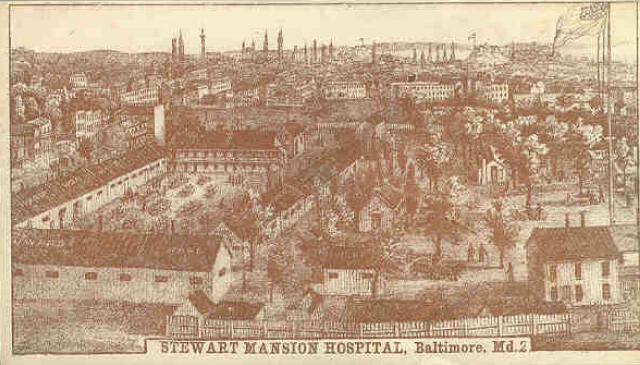 Stewart Mansion Hospital, Baltimore, Md.. Courtesy of Scott Sheads. |
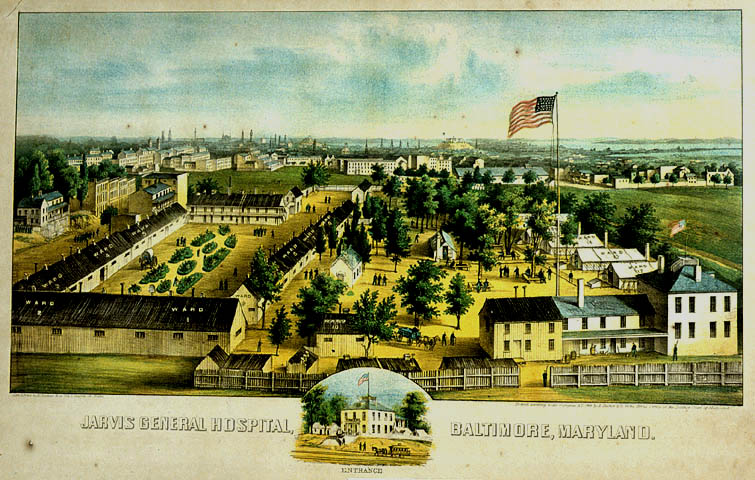 Jarvis General Hospital, Baltimore, Maryland. Cator Collection, Print No. 44. Enoch Pratt Free Library |
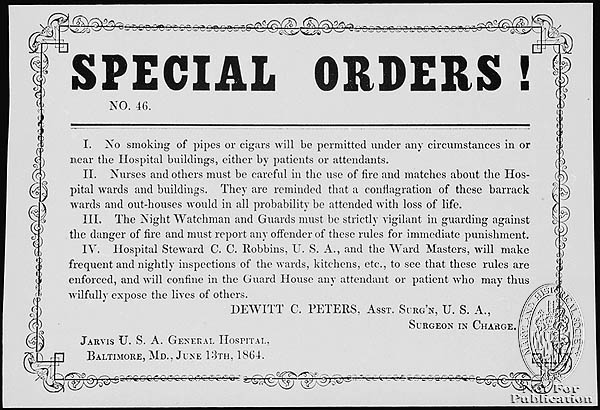 MS 1860 – Jarvis Gen. Hospital – Baltimore. – Special Orders – Print. Matter – June 13, 1864 (Z24.1848). Photograph Collections Cross-Section. Maryland Historical Society |
 Jarvis U.S. Genl. Hospital, Baltimore, Md. / Lith & Print by E. Sachse. Images from the History of Medicine Collection, Order No. A027659. National Library of Medicine, History of Medicine Division |
Additional Information
- Dates: 1862-1865
Notes: Hospital records available at the National Archives, Washington, DC. See RG94 Entry 553 for listing of available hospital registers. - Dates: n. d.
Notes: Female nurses were borne on the rolls of many of the hospitals. At one time, in the WEST’S BUILDINGS, Baltimore, Md., 20 of 70 nurses were women; at STEWART’S MANSION 15 of 70, at and BEDLOE’S ISLAND, N.Y. Harbor, 10 of 70. These were frequently Sisters of Charity — 40 served at SATTERLEE, 16 and POINT LOOKOUT and 15 at CLIFFBURNE. According to the testimony of all the medical officers who have referred to this point their best service was rendered in connection with extra diets, the linen-room and laundry. Male help was preferred in the wards, save in special cases of prostration and suffering where particular care was needful in theadministration of dietetic or remedial agents. Sometimes where no female aid was employed, female aid societies volunteered their services in superintending the extra diets and taking charge of the contribution room.
Source: Medical and Surgical History of the Civil War, Vol. VI [Formerly entitled The Medical and Surgical History of the War of the Rebellion (1861-1865)] Wilmington: Broadfoot Publishing Co.: 958
James Lawrence Kernan Hospital & Industrial School of Maryland
Location: 2000 N. Charles Street, Baltimore, MD
Additional Information
- Dates: 1920
Notes: Amounts appropriated for state-aided institutions, from the Maryland Manual, 1921-1922. - Dates: 1927
Notes: The request for the loan of a piano to entertain the inmates of a hospital for little cripples here in 1910 resulted in a short time afterward in the establishment of one of Baltimore’s most interesting institutions, the James Lawrence Kernan Crippled Children’s Hospital and Industrial School….
See: “Baltimore in Pictures” Baltimore News December 28, 1927 - Dates: 1976
Notes: See also: “Kernan’s Changes” Sun Jan. 16, 1976
Bibliography
- Souvenir, issued for the benefit of the James Lawrence Kernan Hospital and Industrial School of Maryland for Crippled Children : Radnor Park, Hillsdale, Baltimore County. Baltimore: , 1923
- James Lawrence Kernan Hospital and Industrial School of Maryland for Crippled Childen, The James Lawrence Kernan Hospital and Industrial School of Maryland for Crippled Children : Fiftieth Anniversary, 1895-1945. Baltimore: Thomsen-Ellis-Hutton, [1945]
Instructive Visiting Nurse Association
Founded: Incorporated 1896
Location: 1123 Madison Avenue (headquarters), Baltimore, MD
Additional Information
- Dates: 1901
Notes: (Incor., 1896). Headquarters, 1123 Madison Avenue; C&P Telephone, Madison 291. Head nurse, Miss A.M. Carr. Office hours, 8.30 to 9.30 a.m., 1 to 2 p.m. and after 5 p.m. District Offices: south Baltimore, 1418 Light St.; east Baltimore, 101 south Broadway; northeast Baltimore, 1520 east Eager St.; southwest Baltimore, 710 Columbia Ave.; northwest Baltimore, 1100 Patterson Ave. Object.– To provide trained nurses for the indigent sick in their homes, to instruct their families and friends in the proper care of the sick and to teach the simple rules of hygiene. Whenever possible, a small fee is expected, but free care is given when the circumstances of the family do not allow of it. The nurses do not attend cases of contagious diseases or act as mid-wives. In no case do they continue to attend patients who are not under the care of a physician. Messages may be left at the district offices at any time of day; nurses call there at 9 a.m. and 1 p.m. every week-day. Management.– Under board of directors. Supported by voluntary contributions. Year ending October 31, 1900, nurses paid 10,052 visits for nursing care, 2407 for supervision and advice; cared for 1506 new patients. Receipts, $3131.42; expenditures, $3496.38, (balance on hand at beginning of year, $742.68).The use of the house, 1123 Madison Avenue, is given to the Association for 5 years by the heirs of the late Wm. S. Rayner. It is known as the Rayner House and is used as a home for the nurses and office of the head-nurse.
Source: Charity Organization Society, Directory of the Charitable and Beneficent Organizations of Baltimore together with Legal Suggestions, Etc. Baltimore: : 37
Institute for the Instruction of the Blind
Founded: Incorporated 19 May 1853
Location: North Avenue, Baltimore, MD
Images
 Blind Asylum. George Howard, The Monumental City: Its Past History and Present Resources. (Baltimore: J.D. Ehlers, 1873): 51.. American Memory Project: Library of Congress |
Additional Information
- Dates:
Notes: The Maryland Institution for the Instruction of the Blind, located on North Avenue, in this City, was incorporated in 1853, through the efforts of several benevolent citizens. The present building, constructed of Baltimore County Marble at a cost of $145,000 — is beautifully located and can accommodate all who are likely to apply for admission for years to come. Those who are able to pay are expected to do so, but the indigent are received and educated at the expense of the State.
Source: Howard, George, The Monumental City, its Past History and Present Resources Baltimore: J.D. Ehlers & Co: 51 - Dates: 1853/05/19
Notes: Institute for the Instruction of the Blind incorporated.
Source: Quinan, John Russell, Medical Annals of Baltimore from 1608 to 1880, including Events, Men and Literature to which is added a Subject Index and Record of Public Services Baltimore: Press of Isaac Friedenwald: 40
Aged Women’s Home
Founded: Building completed ca. 1849. Opened 1851
Closed: Building demolished July 1959
Location: 1404 W. Lexington St., Baltimore, MD
Images
|
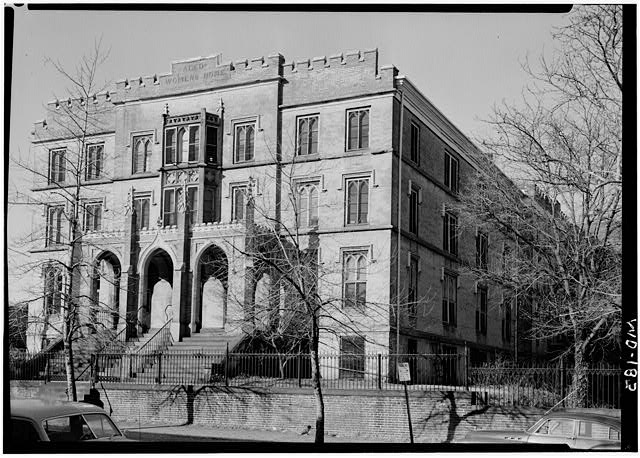
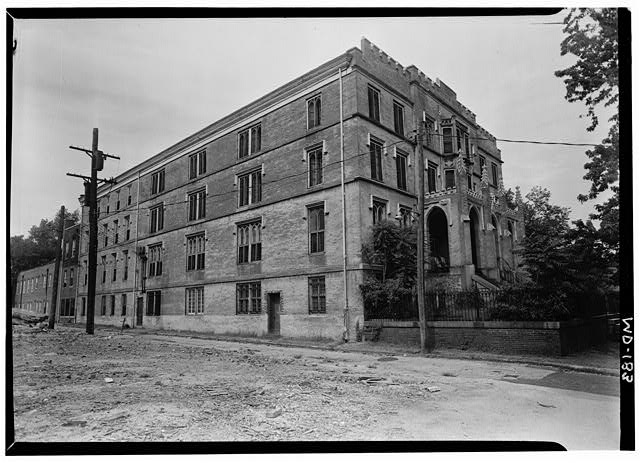 Aged Women’s Home. Historic American Buildings Survey. Library of Congress |
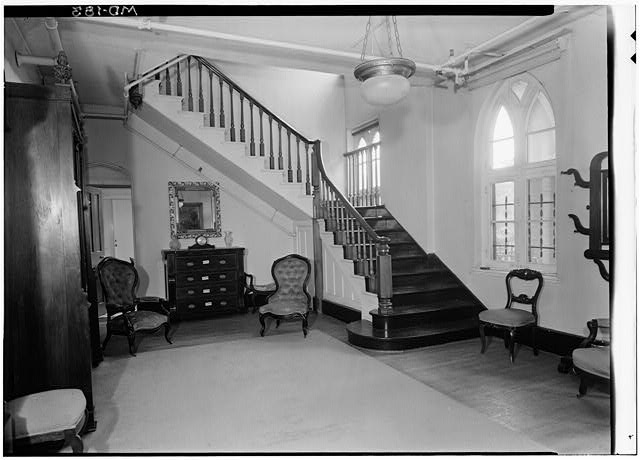 Aged Women’s Home. Historic American Buildings Survey. Library of Congress |
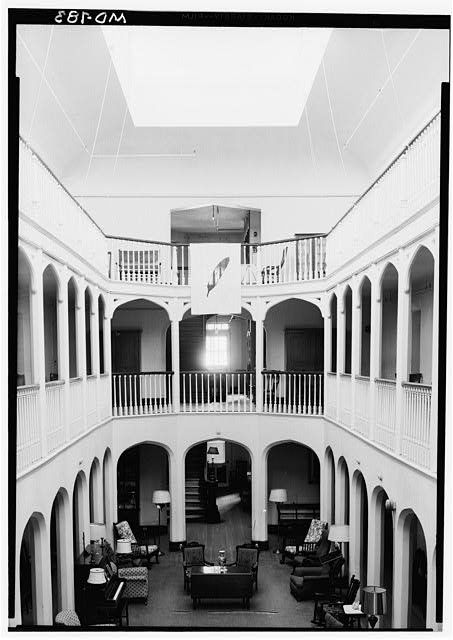 Aged Women’s Home. Historic American Buildings Survey. Library of Congress |
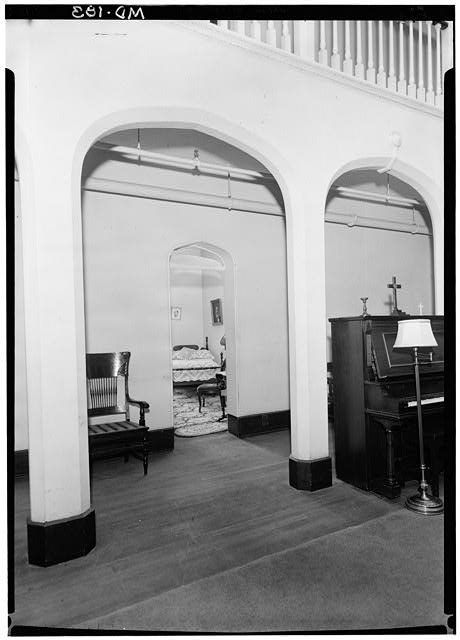 Aged Women’s Home. Historic American Buildings Survey. Library of Congress |
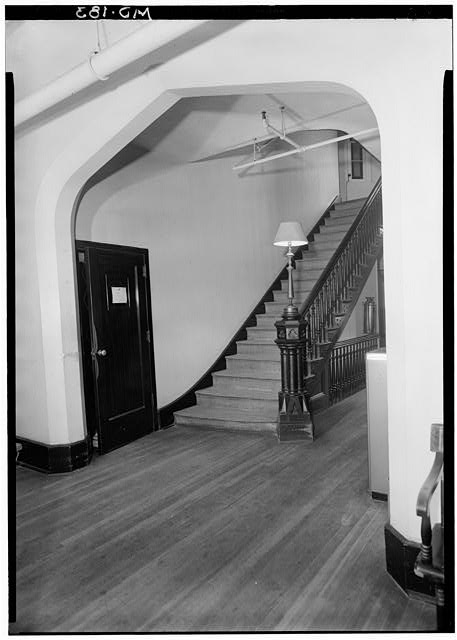 Aged Women’s Home. Historic American Buildings Survey. Library of Congress |
 Aged Women’s Home. Historic American Buildings Survey. Library of Congress |
 Aged Women’s Home. Historic American Buildings Survey. Library of Congress |
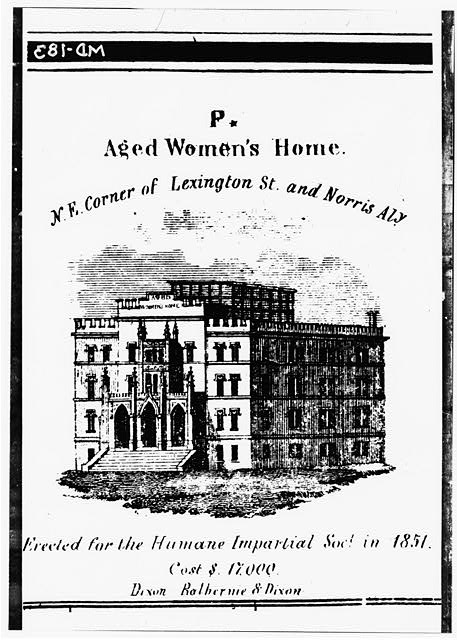 Aged Women’s Home. Historic American Buildings Survey. Library of Congress |
Additional Information
- Dates: Oct. 28, 1851
Notes: Aged Women’s Home, Lexington street, opened.
Source: Quinan, John Russell, Medical Annals of Baltimore from 1608 to 1880, including Events, Men and Literature to which is added a Subject Index and Record of Public Services Baltimore: Press of Isaac Friedenwald: 39, - Dates: after 1933
Notes: Historic American Buildings Survey Report, Aged Women’s Home, 1400 W. Lexington St., BALTIMORE, Baltimore County, MD. (HABS MD-183).
Insane Hospital of Baltimore City
Location: Baltimore, MD
Additional Information
- Dates: 1901
Notes: An organic part of Bay View Asylum. Insane paupers, resident for six months in Baltimore, are admitted. Also emergency cases. Apply at office of Supervisors of City Charities, City Hall, 9 a.m. to 2 p.m. Capacity 400. Three resident physicians.
Source: Charity Organization Society, Directory of the Charitable and Beneficent Organizations of Baltimore together with Legal Suggestions, Etc. Baltimore: : 60
Indigent Widow’s Asylum
Founded: 17 Sep. 1849 (cornerstone laid)
Location: W. Lexington Street, Baltimore, MD
Additional Information
- Dates: 1849/09/17
Notes: Indigent Widow’s Asylum, west Lexington street, corner-stone laid.
Source: Quinan, John Russell, Medical Annals of Baltimore from 1608 to 1880, including Events, Men and Literature to which is added a Subject Index and Record of Public Services Baltimore: Press of Isaac Friedenwald: 39
Indigent Sick Society
Founded: 1823
Location: Bible House, 113 North Charles Street, Baltimore, MD
Additional Information
- Dates: 1901
Notes: (1823). Inquire at Bible House, 113 North Charles St. Object.–Aid to worthy and needy sick in their homes. Management.–A small association of ladies, disbursing the income of a small fund and any donations. Meets at Bible House, the last Wednesday of each month. Year ending March, 1901, 332 sick and destitute persons were visited in their homes and their wants relieved by members of the Society.
Source: Charity Organization Society, Directory of the Charitable and Beneficent Organizations of Baltimore together with Legal Suggestions, Etc. Baltimore: : 39-40
House of the Good Shepherd for White Women
Founded: Opened 1864
Location: Mount and Hollins streets, Baltimore, MD
Additional Information
- Dates: 1894
Notes: THE HOUSE OF THE GOOD SHEPHERD, is situated on Mount and Hollins street, Baltimore. It is a reformatory institution, opened in 1864 in a dwelling then known as the “Donnell Mansion,” the entire cost of the new additions to the original property, which was donated by the late Mrs. Emily McTavish, being $179,000. The institution was placed in charge of the Sisters of the Good Shepherd, (whence its name is derived), whose lives are devoted entirely to sheltering and reclaiming unfortunate and abandoned women and girls, as well as protecting and preserving from danger young girls and children without proper parental care and protection. The institution has been enlarged from time to time by contributions and assistance from the State, until it now has a capacity for several hundred inmates.The work of the institution consists of all kinds of needle-work, from the plainest to the finest, and most exquisite embroidery done by hand. The inmates are principally fallen and abandoned women, many of whom have been committed by the magistrates throughout the State; others have been brought by friends, and some have come voluntarily with a desire to reform.There is also connected with this institution a department where unprotected girls can have proper training and care. There is also a department for children, who when they arrive at eighteen years of age, are provided with good homes by the Sisters. By this means many young girls become useful women through the training received in this institution. The total number of inmates in the institution since its organization is 1,975. At present there are 241 inmates. The State of Maryland appropriates $3,000 per annum to its support. The work performed by the Sisters in charge of this institution has certainly been remarkable. Many fallen women have been reformed and others protected in time to save them from temptations that surround them in great cities. There can be no doubt of the wisdom of the General Assembly in assisting this institution.
Source: Message of Frank Brown, Governor of Maryland, to the General Assembly at its Regular Session, January, 1894 Baltimore: Wm. J.C. Dullany Company: 78-79
 Medicine in Maryland, 1752-1920